Aquaponics

A practical, water-efficient way to grow fresh food, build skills, and strengthen local food systems.

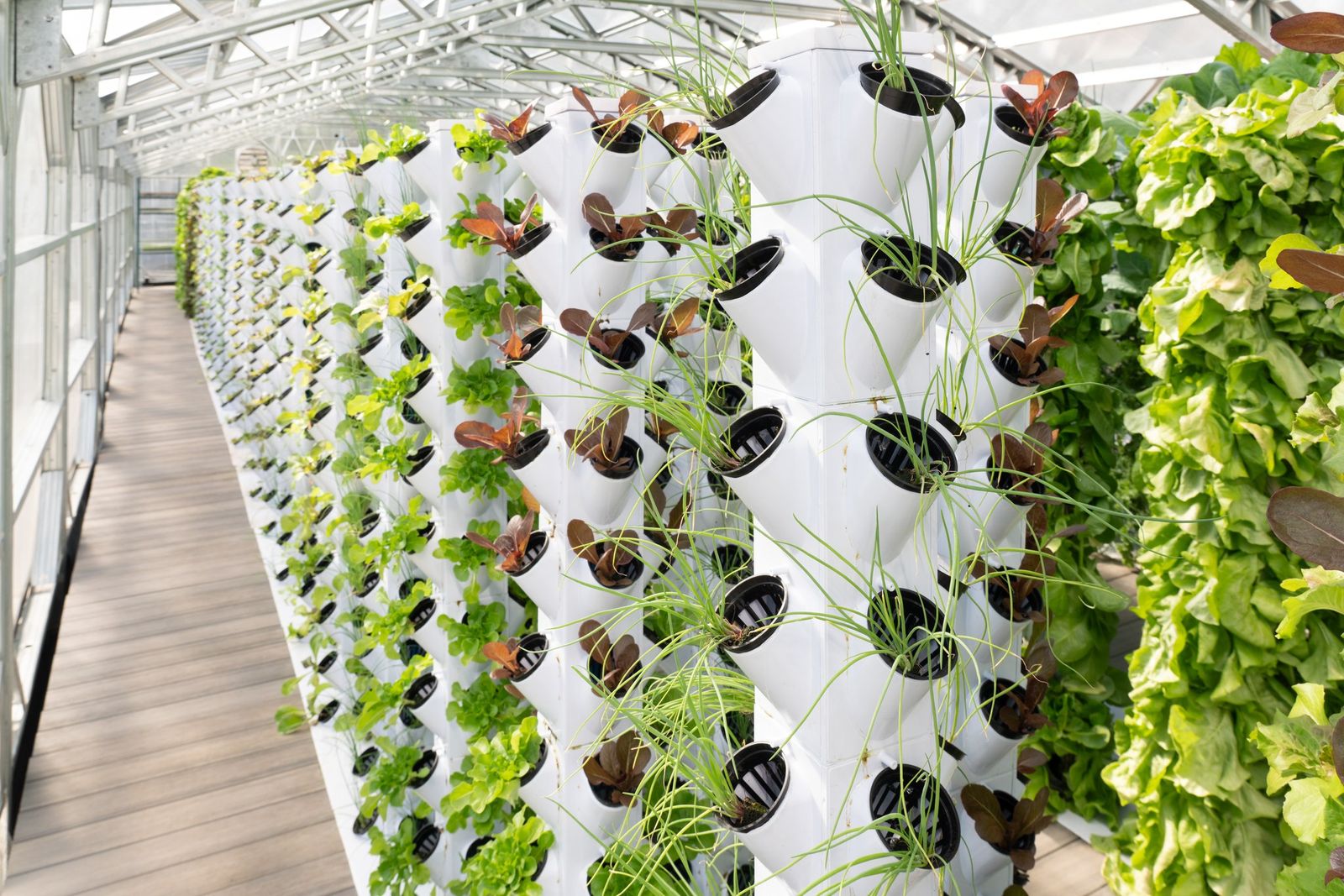
Rows of grow towers inside a FreshMinistries aquaponics greenhouse

Fish tanks and vertical grow towers form a closed-loop system designed for efficient food production.

What Is Aquaponics?

Aquaponics is a closed-loop food-production system in which fish, beneficial bacteria, plants, and water work together. Fish naturally produce nutrient-rich water. Beneficial bacteria convert that material into forms plants can use, while plant roots take up nitrates as they grow and help filter the water before it returns to the fish.

Instead of being discharged after one use, water circulates continuously through the system. This closed-loop design helps avoid routine nutrient runoff, reduces water demand compared with conventional soil-based production, and limits the need for external chemical fertilizer inputs.

When operated in a controlled environment, aquaponics can support reliable, year-round production of fresh food in locations where land, water, or growing conditions may be constrained. Its success depends on trained operators, regular water-quality testing, food-safety controls, and disciplined system maintenance.

How a closed-loop aquaponics system worksWater moves through four connected stages, supporting fish, plants, and food production without routine nutrient runoff. 1, fish tanks: fish naturally add nutrients to the circulating water. 2, filtration: solids are separated, and beneficial bacteria convert waste into plant nutrients. 3, grow towers: plant roots take up nitrates, filter the water, and grow fresh food year-round. 4, return flow: filtered water flows back to the fish tanks. Closed-loop water management, a biological nutrient cycle, and fresh food grown locally. How a closed-loop aquaponics system works Water moves through four connected stages, supporting fish, plants, and food production without routine nutrient runoff. 1 Fish tanks Fish naturally add nutrients to the circulating water. 2 Filtration Solids are separated, and beneficial bacteria convert waste into plant nutrients. 3 Grow towers Plant roots take up nitrates, filter the water, and grow fresh food year-round. 4 Return flow Filtered water flows back to the fish tanks. Closed-loop water management Biological nutrient cycle Fresh food, grown locally How a closed-loop aquaponics system worksWater moves through four connected stages, supporting fish, plants, and food production without routine nutrient runoff. 1, fish tanks: fish naturally add nutrients to the circulating water. 2, filtration: solids are separated, and beneficial bacteria convert waste into plant nutrients. 3, grow towers: plant roots take up nitrates, filter the water, and grow fresh food year-round. 4, return flow: filtered water flows back to the fish tanks. Closed-loop water management, a biological nutrient cycle, and fresh food grown locally. How a closed-loop aquaponics system works Water moves through four connected stages, supporting fish, plants, and food production without routine nutrient runoff. 1 2 3 4 1 Fish tanks Fish naturally add nutrients to the circulating water. 2 Filtration Solids are separated, and beneficial bacteria convert waste into plant nutrients. 3 Grow towers Plant roots take up nitrates, filter the water, and grow fresh food year-round. 4 Return flow Filtered water flows back to the fish tanks. Closed-loop water management Biological nutrient cycle Fresh food, grown locally
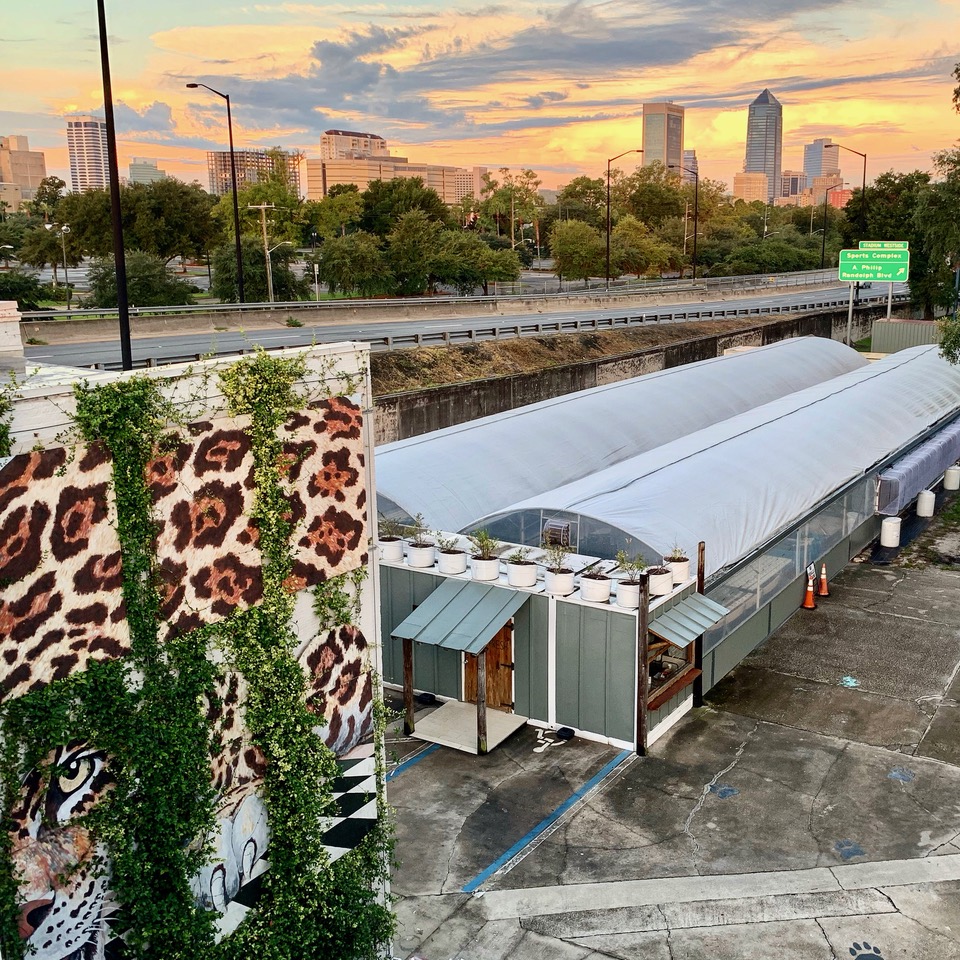
The original 2017 aquaponics greenhouses behind the Weaver Center at dusk, the downtown Jacksonville skyline behind them

Building the Operating Model

FreshMinistries began exploring aquaponics in 2014 through learning partnerships with the University of the Virgin Islands, an early leader in aquaponics research and education. In 2017, the organization opened NativeFresh in Jacksonville as a working food-production and training facility.

NativeFresh created a practical setting to build experience in crop production, food safety, operations, workforce training, and community access to fresh food. Produce was distributed through Duval County Public Schools in partnership with Chartwells, as well as to local restaurants and the Sulzbacher Center. The facility also welcomed more than 1,500 people each month for tours, training, volunteer engagement, and community programs.

That operating experience helped refine systems and strengthen procedures while connecting food production with education and community benefit. It continues to inform FreshMinistries’ food-systems work in the United States and through global partnerships.

From Aquaponics to Optiponics

FreshMinistries’ food-production model has evolved through hands-on operating experience. What began as a way to grow fresh food, build technical skills, and support community access has developed into Optiponics: a more precisely managed approach to controlled-environment food production.

Optiponics retains the closed-loop biological foundation of aquaponics. Fish, beneficial bacteria, plants, and recirculating water remain central to the system. It adds sensors, real-time water-quality monitoring, and carefully managed macro- and micronutrient dosing to help operators fine-tune growing conditions and support a wider range of crops.

Where appropriate, systems can also integrate solar power, remote connectivity, digital controls, and continuing technical support. Together, these features strengthen day-to-day management, enable faster troubleshooting, and support consistent operating practice across locations.

The approach also informs proposed Harvest Hub development. A Harvest Hub can extend food production with refrigeration, preservation, storage, training, aggregation, and local market connections, helping communities reduce loss, create greater value from local production, and build practical pathways to employment and enterprise.

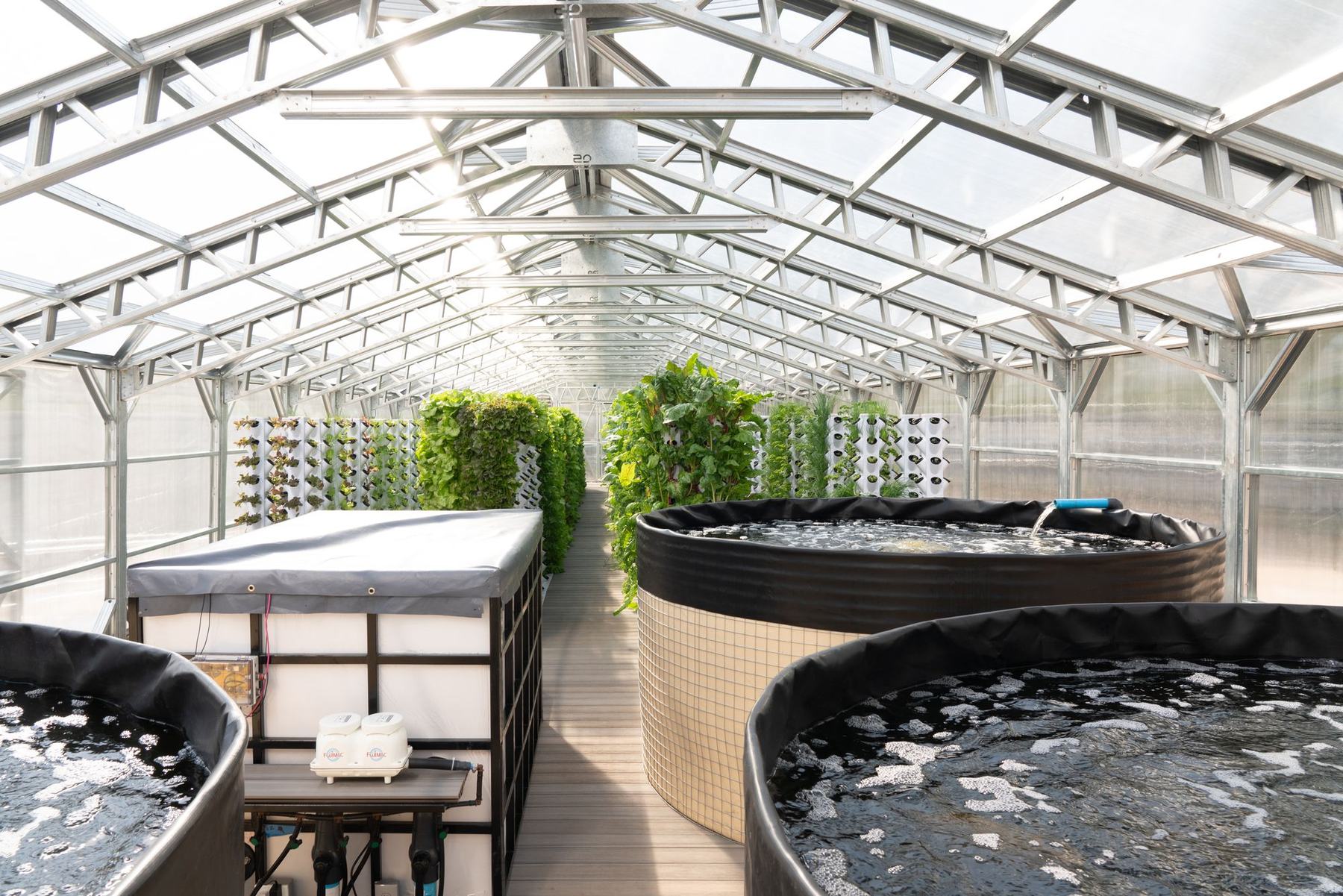
A corridor of vertical grow towers under the greenhouse roof, stacked with lettuce and herbs
From Aquaponics to OptiponicsThe aquaponics foundation is fish, beneficial bacteria, plants, and recirculating water. Optiponics adds precision, not a separate system. 1, fish tanks: fish naturally add nutrients to the circulating water. 2, filtration: solids are separated, and beneficial bacteria convert waste into plant nutrients. 3, the Optiponics precision layer: sensors, monitoring, and carefully managed nutrient dosing help operators fine-tune growing conditions; a controller with solar power reads the water and doses nutrients into the line. 4, grow towers: plant roots take up nitrates, filter the water, and grow fresh food year-round. 5, return flow: filtered water flows back to the fish tanks. Real-time water-quality monitoring, managed nutrient dosing, and solar power where appropriate. From Aquaponics to Optiponics Aquaponics foundation: fish, beneficial bacteria, plants, and recirculating water. Optiponics adds precision, not a separate system. pH 1 Fish tanks Fish naturally add nutrients to the circulating water. 2 Filtration Solids are separated, and beneficial bacteria convert waste into plant nutrients. 3 Optiponics precision layer Sensors, monitoring, and carefully managed nutrient dosing help operators fine-tune growing conditions. 4 Grow towers Plant roots take up nitrates, filter the water, and grow fresh food year-round. 5 Return flow Filtered water flows back to the fish tanks. Real-time water-quality monitoring Managed nutrient dosing Solar powered From Aquaponics to OptiponicsThe aquaponics foundation is fish, beneficial bacteria, plants, and recirculating water. Optiponics adds precision, not a separate system. 1, fish tanks: fish naturally add nutrients to the circulating water. 2, filtration: solids are separated, and beneficial bacteria convert waste into plant nutrients. 3, the Optiponics precision layer: sensors, monitoring, and carefully managed nutrient dosing help operators fine-tune growing conditions; a controller with solar power reads the water and doses nutrients into the line. 4, grow towers: plant roots take up nitrates, filter the water, and grow fresh food year-round. 5, return flow: filtered water flows back to the fish tanks. Real-time water-quality monitoring, managed nutrient dosing, and solar power where appropriate. From Aquaponics to Optiponics Aquaponics foundation: fish, beneficial bacteria, plants, and recirculating water. Optiponics adds precision, not a separate system. pH 1 2 3 4 5 1 Fish tanks Fish naturally add nutrients to the circulating water. 2 Filtration Solids are separated, and beneficial bacteria convert waste into plant nutrients. 3 Optiponics precision layer Sensors, monitoring, and carefully managed nutrient dosing help operators fine-tune growing conditions. 4 Grow towers Plant roots take up nitrates, filter the water, and grow fresh food year-round. 5 Return flow Filtered water flows back to the fish tanks. Real-time water-quality monitoring Managed nutrient dosing Solar powered

The work in numbers.

50,000+ square feet of food-production and training infrastructure developed across operating systems.
5 million+ plant units cultivated through FreshMinistries food-production systems, representing more than 1 million pounds of fresh food.
65,000+ people reached. Students, producers, operators, partners, and community members engaged through food systems training and related programs.

Support Locally Led Food Systems

Together, we can help communities and institutions develop practical food-production systems, strengthen technical capacity, and expand reliable access to fresh food in any environment.